

Il calice dell’occupazione – L’industria dei vini nei territori dei coloni israeliani
IRPIMEDIA (30/1/2026) Ziad Rida ha ereditato insieme ai suoi fratelli e alle sue sorelle circa dieci ettari di uliveti e terreni agricoli nel villaggio palestinese di Qusra, 15 chilometri a sud-est di Nablus. Per generazioni, la sua famiglia ha coltivato grano, lenticchie e ceci. Ma nel 2009, i coloni israeliani hanno occupato la cima della […]
Read →
The theft at the heart of Israel’s booming wine industry
972 MAGAZINE (30/1/2026) After seizing Palestinian land, settlers are replanting it with vineyards — then exporting their wine as ‘Made in Israel’ to obscure its origins. A child’s bicycle, an old suitcase, and a single dusty boot lie among the remains of Atiriyah in the South Hebron Hills region of the occupied West Bank — […]
Read →
En Cisjordanie, le vin au service de la colonisation
LE MONDE DIPLOMATIQUE (29/1/2026) With Meriem LaribiPhotos by Mosab Shawer and Ahmad Al-Bazz In French: https://www.monde-diplomatique.fr/2026/02/LARIBI/69283In English: https://mondediplo.com/2026/02/12west-bankIn Spanish: https://www.eldiplo.org/320-imperialismo-desatado/el-vino-al-servicio-de-la-colonizacion/In German: https://monde-diplomatique.de/artikel/!6143867
Read →
A ocupação esquecida dos montes Golã
PÚBLICO (14/11/2025) Em terras sírias confiscadas, Israel construiu colonatos, bases militares e adegas. O vinho produzido nos territórios ocupados é exportado para a Europa, e encontra-se à venda em Portugal. O autocarro que liga a Galileia aos Montes Golã ocupados circula quase vazio. Os poucos passageiros são quase todos soldados israelitas. Entram fardados e armados […]
Read →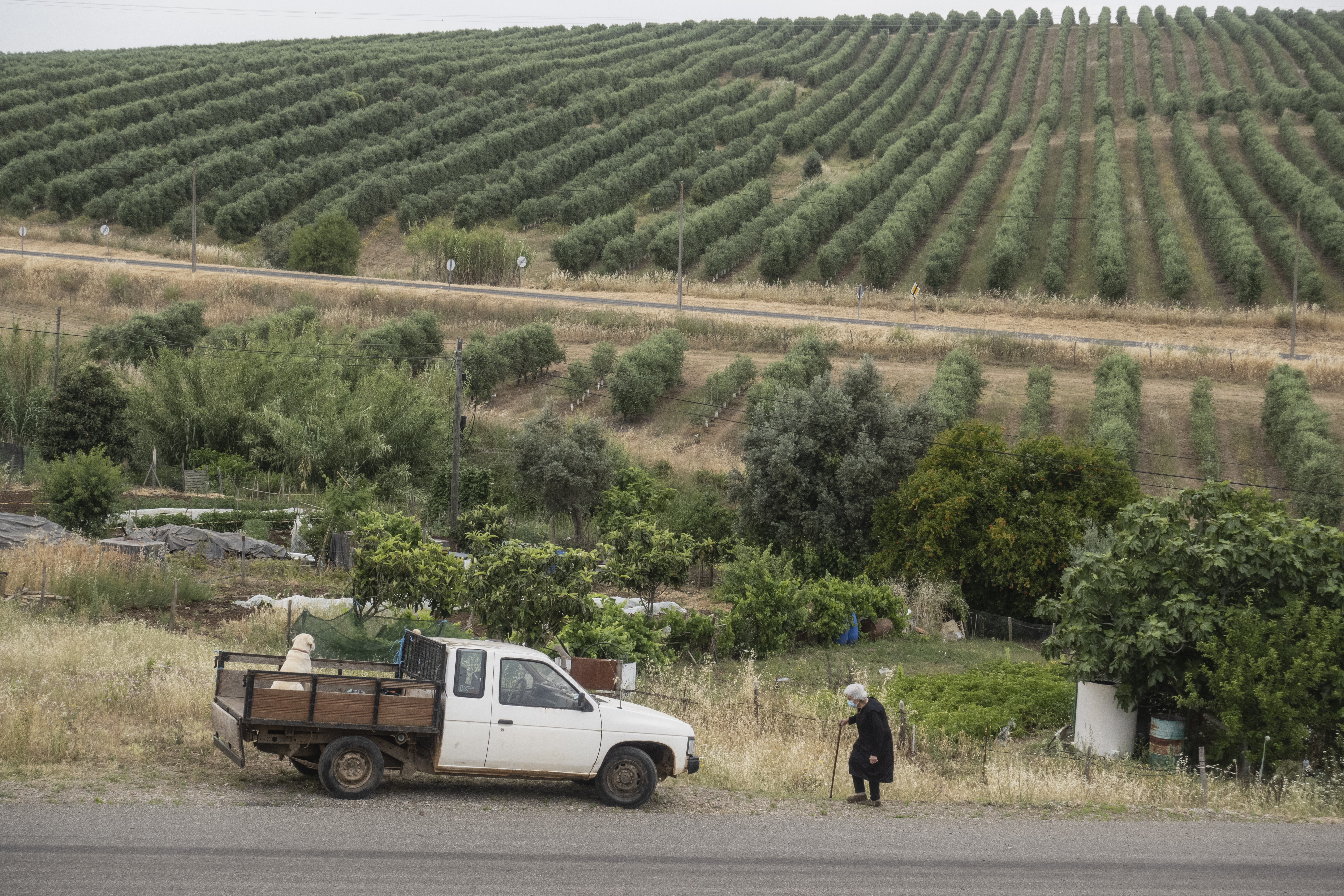
Ganancias corporativas, pérdidas ambientales: el mayor lago artificial de Europa impulsa olivos intensivos
EL SALTO (19/10/2025) Una enorme presa construida con fondos públicos en el sureste de Portugal prometió desarrollar una de las regiones más áridas y empobrecidas de Europa. Sin embargo, la agricultura industrial de olivos está destruyendo ecosistemas y provocando la erosión del suelo y la pérdida de biodiversidad, mientras grandes corporaciones obtienen beneficios. Las hileras […]
Read →
In Portugal’s Rural North, Communities Are Resisting Lithium Mining
NEW LINES MAGAZINE (24/4/2024) Under the banner of a “green transition,” the EU is rushing to revive mining to secure critical raw materials. Plans to build large, open-pit mines in northeastern Portugal have been met with strong opposition from local communities, who are contesting the state’s authority to grant mining licenses without their consent. As […]
Read →
Europe’s thirst for lithium threatens livelihoods, biodiversity in Portugal
AL JAZEERA (30/1/2024) Paulo Pires walked up the hill with his flock of sheep and dogs on a warm day in August, as a stream of water gushed down an ancient irrigation channel that has been maintained by local communities over many generations. “There is a lot of wealth here,” said Pires, now resting in […]
Read →
Lithium mining threatens agricultural heritage in Portugal’s Barroso
MONGABAY (11/12/2023) In the hills of Barroso high in northeastern Portugal, the water gushes down small channels built many centuries ago, winding through a mosaic of pastures, oak and pine forests, and arable and fallow land. Sitting on her porch overlooking a carefully kept garden full of flowers and vegetables, Aida Fernandes remembers the day […]
Read →
Europe’s growing appetite for berries is sucking up Iberia’s water
EARTH ISLAND JOURNAL (March 2023) Autumn in Doñana National Park was once a spectacle of abundance. First the rains would arrive. Then, the birds. Journeying from Northern Europe, millions of migratory birds would descend on the wetland complex in southern Spain, heralding the start of the new season. Northern shovelers, pintails, whistling ducks, and other […]
Read →
In the Iberian peninsula, “unsustainable, unviable” berry businesses are draining water and exploiting migrant labour
EQUAL TIMES (5/12/2022) On a breathless summer morning in El Rocío, a village bordering Spain’s Doñana National Park, Juan Romero points to a map detailing the surrounding area. “Here are the berry crops,” he says, tracing their encroachment of the park from the north and west. “It’s all full of plastic.” For years, the retired […]
Read →